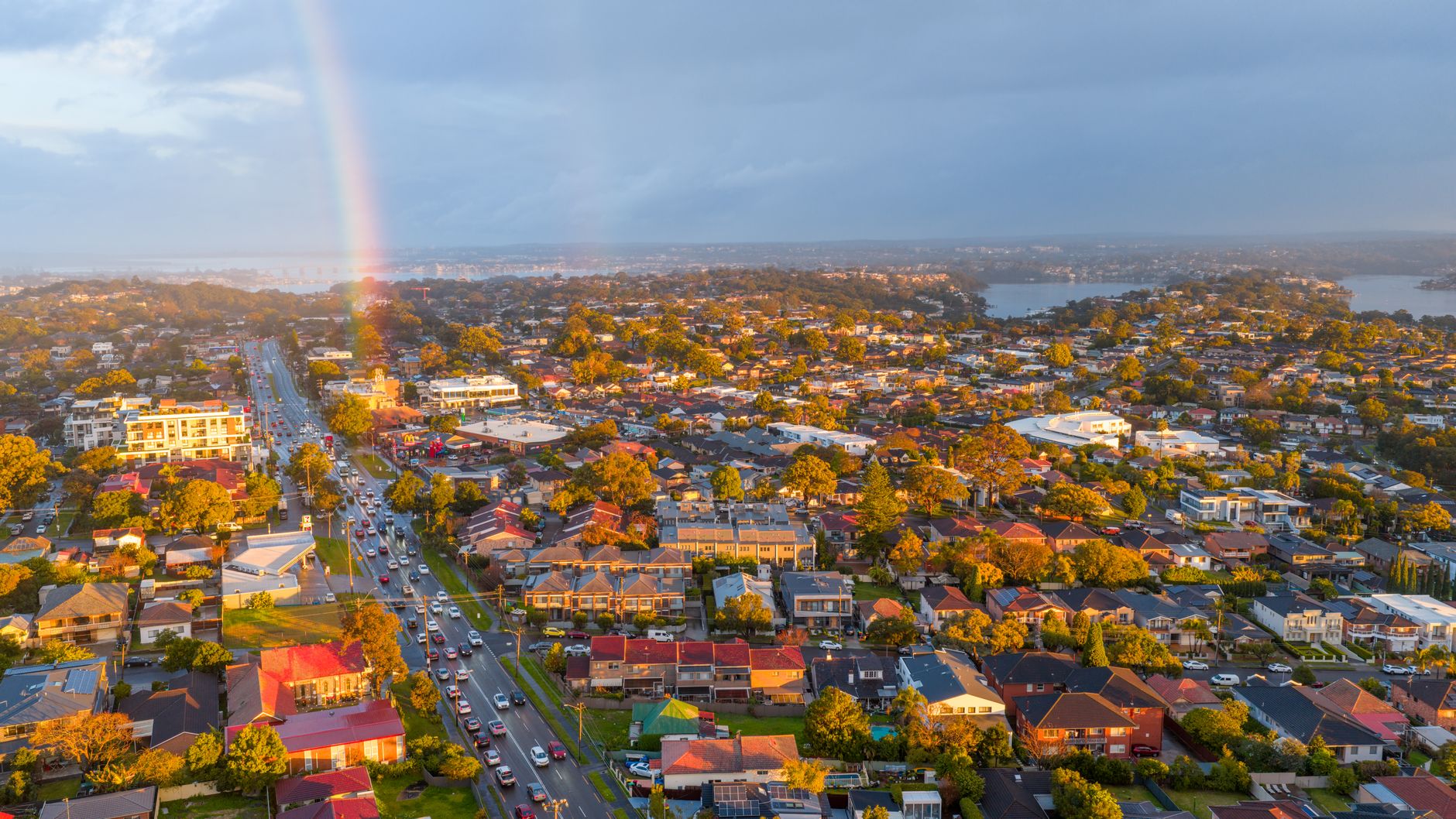
The history of Liberty Grove runs deeper than its polished streetscapes suggest. What residents today know as a compact, well-connected suburb in Sydney's inner west began as a stretch of open grassland called Liberty Plains, one of the first named districts to emerge from early colonial settlement. Understanding that journey, from rough pastoral land in the 1790s to a carefully planned residential precinct in the late 1990s, reveals a lot about how Sydney itself has grown and changed.
Liberty Plains: the colonial starting point
The area now encompassing Liberty Grove, Lidcombe, Auburn, and surrounding suburbs was collectively known as Liberty Plains in the earliest years of the New South Wales colony. The name itself is telling. Governor Arthur Phillip and his successors granted land in this district to emancipated convicts, men and women who had served their sentences and were given the chance to farm for themselves. "Liberty" referred directly to that freedom.
The land was well-suited to grazing and small-scale agriculture. It sat on the floodplain of the Parramatta River, reasonably fertile, and accessible enough from the settlement at Parramatta to supply the colony with grain and livestock. By the early 1800s, Liberty Plains had a scattered population of smallholders, and the district was slowly being carved into recognisable properties.
The Wangal people of the Eora nation had lived across this land for thousands of years before European contact. Their connection to the waterways of the Parramatta River and the surrounding bushland predates any colonial boundary by an enormous margin, and that history sits beneath every part of modern Liberty Grove.
From farmland to industrial fringe
Through the nineteenth century, the character of the area shifted. The arrival of the railway at Auburn in 1876 changed the economic logic of the district. Land near rail access became valuable for industry, and what had been farming country began attracting brickworks, abattoirs, and light manufacturing. The suburb boundaries we recognise today didn't yet exist. This whole band of western Sydney was an industrial and agricultural fringe, growing messily outward from the city.
The specific parcel of land that would eventually become Liberty Grove spent much of this period as part of the broader Homebush and Silverwater corridor, an area defined for decades by industrial use. Sydney's abattoirs at Homebush operated from 1907 and shaped the entire district's identity for most of the twentieth century. The land was not especially glamorous. It was working land, a long way from residential Sydney.
The Olympic transformation
The story of Liberty Grove as a suburb is inseparable from the story of the Sydney 2000 Olympic Games. The decision to host the Olympics at Homebush Bay, announced in 1993, triggered one of the largest land remediation and development projects in Australian history. The industrial sites and former abattoir land around Homebush were decontaminated and redeveloped at scale, and the planning for the surrounding residential precincts happened in parallel.
Liberty Grove was gazetted as a suburb in its own right in 1996, carved out of the former Homebush area specifically to give the new residential development its own identity. The name was a deliberate callback to the colonial-era Liberty Plains, connecting the new precinct to the district's earliest history. Developers Mirvac and Lend Lease built out the suburb through the late 1990s, with the first residents moving in around 1997 and 1998.
The design was intentional in ways that older Sydney suburbs weren't. Liberty Grove was planned with pedestrian links, shared green spaces, and consistent architectural guidelines baked in from the start. It's one of a small number of Sydney suburbs that arrived with a masterplan rather than growing organically over generations.
What the suburb looks like now
Liberty Grove today covers just under one square kilometre and sits between Homebush and Rhodes, bordered by the Parramatta River to the north. Its population is relatively small, around 5,000 residents, but the suburb has a density that reflects its apartment-led origins. Most housing stock dates from the late 1990s and early 2000s, giving the streets an unusual coherence compared to the mix of eras found in neighbouring suburbs.
The suburb's planned bones show in its infrastructure. The foreshore walking path along the Parramatta River is a direct result of the original development framework, not a later addition. Walking and cycling trails around Liberty Grove connect the suburb to the broader network of paths running through Homebush Bay and toward Rhodes, all of which trace back to decisions made during the Olympic-era planning phase.
Community life has deepened over the 25-plus years since those first residents arrived. The suburb has its own community association, a local shopping village, and a calendar of events that reflects the diverse mix of residents who've made it home. For anyone thinking about moving here, the complete guide for new residents covers the practical side of what to expect in detail.
A suburb still finding its story
Liberty Grove is young, as Sydney suburbs go. It doesn't have a pub that opened in 1920 or a school with a century of photographs on the wall. What it has instead is a deliberately constructed identity, one that leans on a genuine historical name, sits on land with a complex layered past, and houses a community that has largely chosen to be there.
The Olympic legacy is tangible. Sydney Olympic Park sits immediately adjacent, and residents live alongside parklands, velodrome facilities, and infrastructure that most suburbs could never build from scratch. That proximity to one of Australia's most significant public spaces is a direct consequence of the suburb's unusual origin story.
The history of Liberty Grove is short in years but layered in meaning: colonial freedom grants, industrial transformation, Olympic ambition, and finally a neighbourhood that has quietly settled into itself. The plains that once gave emancipated convicts a start are now home to a community that, by most accounts, is glad to be there.